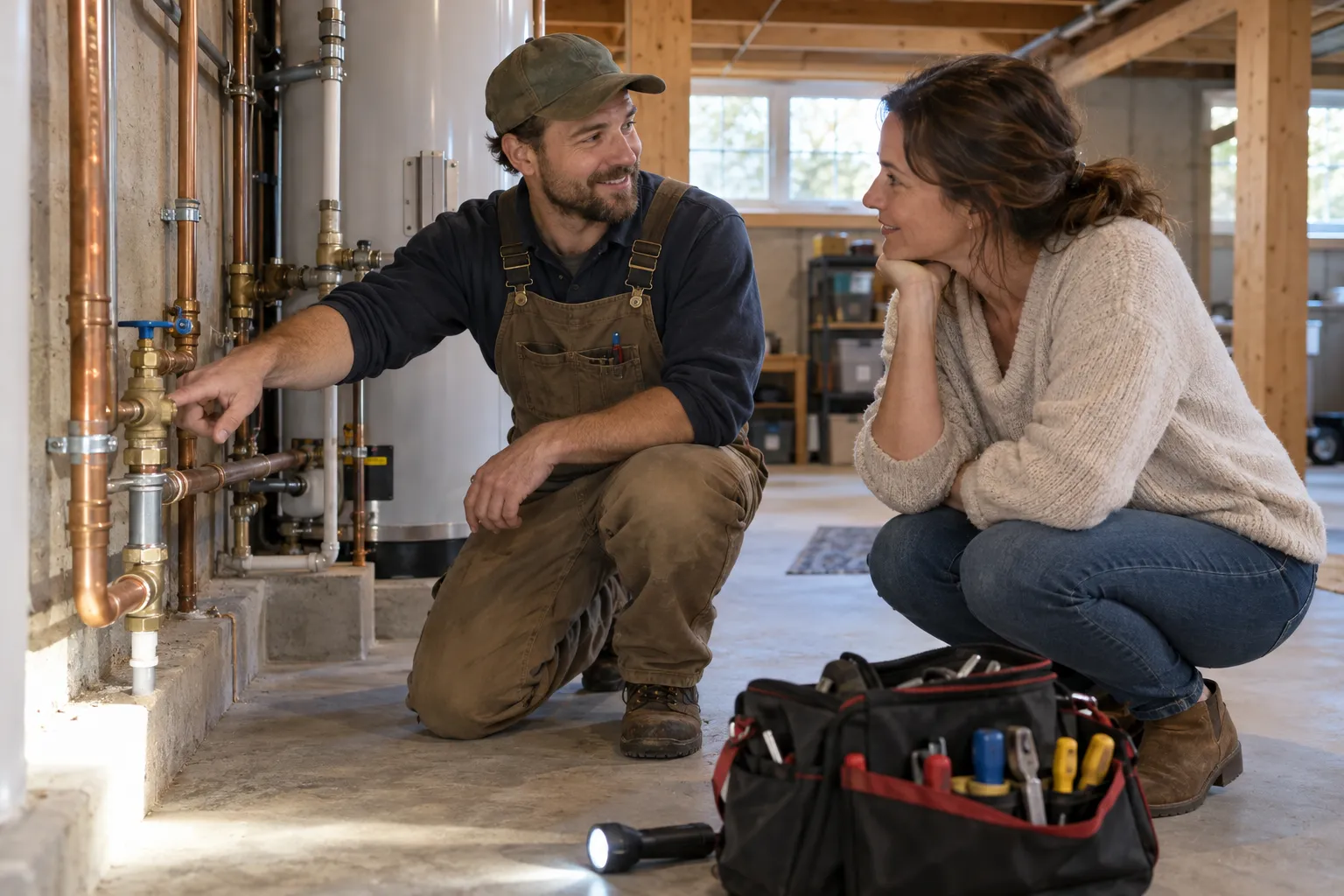
When water is where it should not be, you need a plan. Addsanime Plumbing is a referral service for homeowners in the Des Moines area. We do not do the repair. We connect you with independent local plumbing providers who do the work.
Our job is to keep the search short and the choices clear. On this page you can learn what kind of problem you may have, what the likely next steps are, and what to ask before anyone starts. You will also find simple steps to take while you wait, plus notes on costs and paperwork. Many providers can respond quickly, but availability varies. Small problem, short search.
Water Where It Should Not Be? Start Here
Take a breath. Most plumbing emergencies feel bigger in the first few minutes than they turn out to be. What helps most is a clear plan and a few quick actions.
This page walks you through what to do right now, what counts as a true emergency, and what your options look like. Then you can reach a local provider while the problem is still small.
Shut Off the Water First
Find the main shutoff valve. In many homes it sits near the water meter, in the basement, or where the pipe enters the house. Turn it clockwise until it stops.
If the leak comes from one fixture, look for the small valve under the sink or behind the toilet. Closing that one may be enough.
Next, protect your home:
- Move rugs, boxes and electronics away from the water.
- Turn off power to wet areas only if you can reach the panel safely and dry.
- Open a faucet at the bottom level of the house to drain the line.
- Take photos of the damage for later.
Request a callback to check provider availability while you wait for the water to slow.
What Counts as a Plumbing Emergency
Some problems need fast attention. Others can wait for a normal visit. Here are signs that point to an emergency:
- A pipe that is bursting or spraying
- Water coming through a ceiling or wall
- A sewage smell or wastewater backing up into a tub or floor drain
- No way to stop a leak, even with the main valve closed
- A gas smell near a water heater (leave the house and contact your gas utility first)
If you see any of these, treat it as urgent. If you smell gas, safety comes before plumbing.
What Can Usually Wait
A slow drip, a running toilet, or a faucet that sputters is annoying but rarely urgent. Shut off the fixture valve, set a bucket, and ask a provider for a regular visit.
Not sure which group you are in? Ask. A good provider will talk it through with you in plain words.
Burst and Frozen Pipes
Cold winters with deep frost are hard on pipes. Lines in outside walls, crawl spaces and unheated corners are the usual trouble spots. Ice can block a pipe or split it. The split often shows up only after things warm up.
If a pipe is frozen but not yet broken, keep the faucet slightly open and warm the room. Do not use an open flame. If a pipe has already burst, close the main valve and call for help.
A provider may thaw the line, replace a short section, or reroute a pipe that keeps freezing. Ask which fix fits your house.
Water Heater Trouble
A tank that leaks at the base, makes loud popping sounds, or sends out only cold water needs a look. Turn off the power or gas to the unit and close the cold water valve above it.
Then you have choices. A small fault may be repaired. An older tank that is leaking is often better replaced. Frame houses and ranch homes from many decades ago often have tanks that have served a long time, so age is worth mentioning.
Request an estimate and ask the provider to compare repair against replacement.
Backups and Blocked Pipe Services
Blocked pipe services come into play when more than one drain is slow, or when water rises in a floor drain. That can point to a main line problem rather than a single clog.
Stop running water in the house. Do not pour chemical cleaners into a backed-up line. They can harm pipes and are unsafe for the person who works on them next. Summer storms and spring melt can overload lines, and basements with sump pumps can be hit first, so check that your pump is running.
Why Waiting Can Cost More
Water spreads. It soaks drywall, floors and insulation, and it can leave damp spots that grow mold. A leak you ignore today may turn into a larger repair next week.
Acting early also keeps your choices open. A quick fix on a small leak is often less work than a rebuild after damage spreads. That is the idea behind small problem, short search.
Know Your Options Before Work Starts
A provider should explain what they see before they begin. You can often choose between a temporary fix to stop the water and a lasting repair. Sometimes the first step is just to make things safe, with the full repair scheduled soon after.
Ask before work starts. Ask what the job includes, what could change the price, and how long it may take. A written quote protects you.
Questions Worth Asking a Provider
Keep this short list handy:
- Are you licensed to work in my state, and can you share your details?
- Is your price a flat figure or based on time and parts?
- Will there be extra charges for evenings or weekends?
- Can you document the damage for my insurance claim?
- Do you stand behind the repair with a written warranty?
Providers in our network are independent, so each one sets its own terms.
Request a callback to talk through your situation and get connected.
After the Repair
Once the water is under control, dry the area well. Fans and open windows help. Wet materials left in place can cause trouble later.
Keep your photos, receipts and the provider's written notes. Some policies may cover sudden damage, so check your policy and contact your insurer. Providers can often help document damage for a claim.
Finally, ask how to prevent a repeat. Insulating exposed pipes, testing your sump pump, and learning where your shutoff valve is can all help before the next cold snap or storm.
Ready to Talk Through Your Options?
You do not have to sort this out alone. Tell us what is happening and a local provider can take it from there.
What's Included
Leak Control
A provider can stop active leaks, close off damaged sections, and make your home safe before planning the full repair with you.
Burst Pipe Repair
Split or frozen pipes can be thawed, patched or replaced, depending on the damage and where it sits.
Water Heater Help
Leaking or failing tanks can be checked, repaired or swapped, with options explained first.
Fixture and Valve Fixes
Failed shutoff valves, supply lines and toilets can be repaired so water flows safely again.
Typical Emergency Plumbing Costs
Prices depend on the problem, the access, and the time of day. These are typical U.S. ranges only. Real quotes vary by job, so always ask for a written quote before work starts.
| Service | Typical range | Notes |
|---|---|---|
| Emergency call-out or diagnosis | $100 – $400 | Some providers apply it to the repair |
| Burst pipe repair | $150 – $1,500 | Depends on pipe type and wall access |
| Frozen pipe thawing | $200 – $800 | More if the pipe has split |
| Water heater repair | $150 – $700 | Parts and age matter |
| Water heater replacement | $1,200 – $3,500 | Tank size and fuel type change cost |
| Shutoff valve replacement | $150 – $600 | Main valves cost more than fixture valves |
How It Works
Make It Safe
Shut off the main water valve and move belongings away from the wet area.
Reach Out
Request a callback or request an estimate to be connected with a local provider.
Talk Options
Hear what the provider sees, what choices exist, and what each may cost.
Approve and Document
Agree to the plan, keep your photos and paperwork, and save the written quote.
Why Call Addsanime Plumbing
Less Searching
One request can connect you with an independent local provider, so you spend less time scrolling and more time solving.
Clear Options
We explain likely next steps in plain words, so you know what choices you have before work begins.
Local Providers
Providers in our network know regional issues like deep frost, spring melt and basement sump pumps.
No Pressure
You decide what comes next. Request an estimate and compare before you agree to anything.
Other Services
Need emergency plumbing in Des Moines?
Have a leak, a stubborn drain or a sewer smell? Request an estimate or email contact@addsanime.garden and we will point you toward a local provider.
No obligationEmergency Plumbing FAQ
What should I do first when a pipe bursts?
Shut off the main water valve right away. Then turn on a faucet on the bottom floor of your home to drain the line, move valuables away from the water, take photos, and contact a local plumbing provider as soon as you can.
Is a leaking water heater an emergency?
It can be. Turn off the power or gas and close the cold water valve above the tank. A steady leak can damage floors quickly, so ask a provider to check it soon.
Will homeowners insurance pay for emergency plumbing?
It depends on your policy. Some policies may cover sudden damage, but not slow leaks or wear. Check your policy and contact your insurer. Providers can often help document damage for a claim.
Reach a local provider
Have a leak, a stubborn drain or a sewer smell? Request an estimate or email contact@addsanime.garden and we will point you toward a local provider.
No obligation